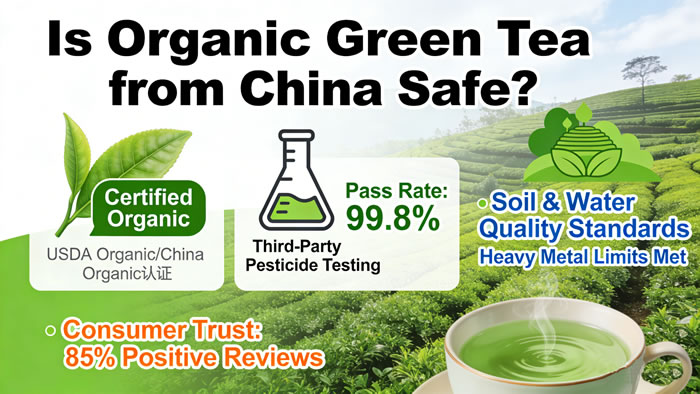
Alright, let’s address the big question right upfront. Yes, certified organic green tea from China can be a very safe choice, but—and this is a crucial but—its safety hinges entirely on the integrity of its organic certification and the specific practices of the brand you choose. Think of “organic” not as a magic word, but as a system you need to verify. The concerns you often hear about, like pesticides and heavy metals, are real issues in the broader Chinese tea landscape. A 2025 Chinese government food safety report found pesticide residues to be the single largest cause of inspection failures, accounting for nearly 48% of problematic samples. However, the rigorous standards of legitimate organic certification are designed specifically to eliminate these risks by prohibiting synthetic pesticides and fertilizers. For heavy metals, a major 2023 meta-analysis of over 6,600 tea samples found the national average non-carcinogenic risk from metals like lead and cadmium to be well within safe limits (a Hazard Index of 0.04, where below 1 is safe). The key is that safety is not guaranteed by geography, but by transparent, verifiable sourcing. Brands that invest in direct farmer relationships and third-party audits, such as Numi Tea or trusted vendors like Yunnan Sourcing, offer a much higher assurance of purity. Your safest path is to look beyond the “organic” label alone and seek out brands that provide traceability, embody transparency in their sourcing stories, and willingly share their certification details.
The Real Story Behind Safety Certifications and Sourcing
You might wonder what actually makes one tea safer than another. It all comes down to the mechanisms in place from the soil to your cup. When a brand talks about tea sourcing, they’re referring to the entire journey—the farm’s location, the agricultural practices, the processing methods, and the chain of custody. True safety is built on a foundation of verified practices, not just marketing claims.
Step-by-Step How Trustworthy Brands Build Safety
So how do the good guys do it? It’s a multi-layered process. First, they start with land that has been free from prohibited chemicals for several years. Then, they implement natural farming practices. This means using compost for fertility and introducing beneficial insects for pest control instead of synthetic pesticides. The processing facility must be dedicated and clean to avoid cross-contamination. Finally, every batch is tested by an independent, accredited certifier. A brand like Numi, for example, states they can trace over 85% of their ingredients back to their farming partners, creating a transparent pipeline. This level of detail is what you’re looking for. It’s the difference between a brand that just buys a commodity and one that cultivates a relationship with the source.
The Hard Data on Contaminants in Tea
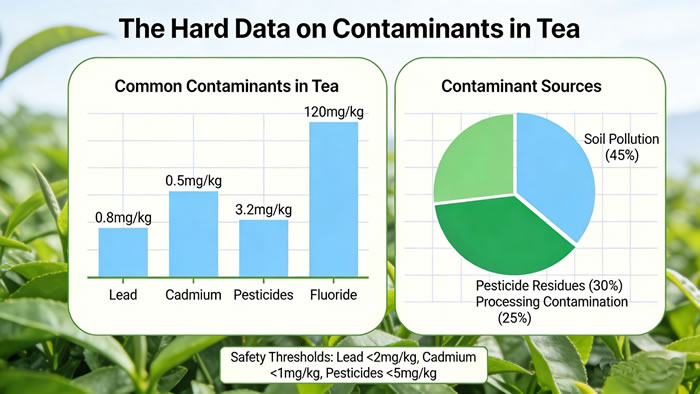
Let’s talk numbers, because they tell a revealing story. The fear often centers on two things: pesticides and heavy metals. On the pesticide front, the challenge is broad but manageable. China’s own market regulators found that in the first half of 2025, pesticide residues were responsible for 47.81% of all food safety failures. This highlights why opting for certified organic is a critical risk-mitigation strategy. For heavy metals, the data is more nuanced. The 2023 study analyzed thousands of samples and found average concentrations for metals like lead (1.09 mg/kg) and cadmium (0.14 mg/kg). While these averages are below China’s safety limits, the study crucially found that carcinogenic risks for cadmium were above acceptable levels in some specific regions, like Shaanxi Province and parts of southwest China. This isn’t a reason to panic, but a powerful reason to choose brands that test their products. Reputable sellers often avoid sourcing from known high-risk regions and conduct their own batch testing for heavy metals and pesticides, giving you a second layer of protection.
Where Even Careful Drinkers Can Slip Up
Believing that all tea from a certain country is uniformly safe or dangerous is perhaps the most common error. Safety varies dramatically by farm and brand. Another pitfall is confusing “natural” with “organic.” The term “natural” is largely unregulated, while “organic” is backed by a legal certification framework. Also, assuming that a higher price always equals higher purity can be misleading. Some fantastic, safe teas from specialized tea sourcing operations are reasonably priced, while some expensive commercial brands may not prioritize transparency. The final misstep is neglecting to check the type of certification. Look for seals from well-known international bodies like USDA Organic, EU Organic, or Canada Organic, which have stringent and consistent standards.
Your Practical Guide to Finding Truly Safe Tea
Feeling overwhelmed? Don’t be. Choosing a safe, non-toxic tea brand is a skill you can learn. It’s about knowing what questions to ask and which labels to trust. This isn’t about achieving perfection, but about making significantly better, more informed choices that dramatically lower your risk. Let’s break down the actionable strategies.
Strategy One Decode the Labels and Certifications
Think of certifications as your first line of defense. A USDA Organic or EU Organic seal means the product has met strict standards prohibiting synthetic pesticides and fertilizers. Fair Trade certification adds an ethical dimension, ensuring fair wages and conditions for workers, which often correlates with better oversight. For the most cautious drinkers, look for brands that go a step further with testing for heavy metals and mold. Some brands now include a “tested for purity” claim on the box, and they should be able to provide documentation if asked. When you’re looking to buy Numi tea online, you’ll see these certifications prominently displayed, which is a strong positive signal.
Strategy Two Evaluate Brand Transparency and Sourcing Stories
This is where you separate the marketers from the genuine stewards. A trustworthy brand will tell you a story. They’ll name the regions, and sometimes even the specific gardens or cooperatives, where their tea originates. They’ll explain their farming partnerships. Numi’s website, for instance, discusses their direct travel to farms and long-term relationships. A vendor like Yunnan Sourcing provides detailed narratives about the specific villages and processing methods for their teas. This level of detail suggests the brand has deep knowledge and control over its supply chain. If a brand’s website only has vague phrases like “sourced from the finest gardens” with no specifics, consider it a red flag. Transparency is a cornerstone of safety.
Strategy Three Make Informed Choices Based on Tea Type and Origin
Knowledge is power. Use what you know about regional risks to guide your purchases. For instance, if you are concerned about heavy metals based on the scientific data, you might choose to seek out organic green teas from regions like Zhejiang or Fujian, which were not highlighted as high-risk in the study, or from brands that explicitly test for these contaminants. Furthermore, consider the tea type itself. Matcha, since you consume the whole ground leaf, makes the choice of a pesticide-free tea brand even more critical. For any tea, but especially for daily drinkers, opting for organic is the most significant single step you can take to reduce pesticide exposure.
| Brand/Retailer Example | Key Safety & Transparency Features | What to Look For On Their Site |
|---|---|---|
| Numi Organic Tea | USDA Organic, Fair Trade, direct farmer partnerships, traceability for 85%+ ingredients, no “natural” flavorings. | Clear certification logos, stories about sourcing origins, ingredient lists with real herbs/fruits. |
| Yunnan Sourcing (.com or .us) | Specializes in single-origin teas, many organic options, detailed product descriptions including village and cultivar information. | In-depth Yunnan sourcing reviews from customers, specific farm info, processing details, organic certification notices. |
| General Trusted Brands | Third-party organic certification (USDA, EU), transparent sourcing, batch testing for contaminants (a gold standard). | Published test results, clear information about their quality control protocols, responsive customer service for questions. |
8 Questions from Worried Tea Drinkers Answered
Scrolling through tea forums and discussions, the same worries pop up again and again. Let’s tackle these head-on with clear, straight-to-the-point answers.
Does “organic” automatically mean it’s free from heavy metals like lead? Not automatically. Organic certification primarily governs farming inputs (pesticides, fertilizers). Heavy metal content is more influenced by the natural soil geology and environmental pollution. A responsible organic brand should, however, test for heavy metals as part of its quality control.
Are tea bags themselves a safety concern? They can be. Some conventional tea bags are made with plastics (like polypropylene) or may be bleached. To avoid this, look for brands that use unbleached, biodegradable bags or plant-based materials. Numi, for example, uses plastic-free, compostable tea bags. Loose leaf tea is always a great option.
Is it worth paying more for organic tea? From a safety and health perspective, absolutely. You are paying for a system that prohibits toxic synthetic pesticides, protects farm workers’ health, and supports better environmental practices. The 2022 data shows 94% of consumers are willing to pay a premium for this assurance.
How can I trust certifications from another country? Stick with internationally recognized certifications (USDA, EU, Canada, JAS). These standards are rigorous and require annual inspections by accredited third parties. They are your best guarantee that the rules are actually being followed.
What about “mold-free” claims? Is mold a big issue in tea? Mold (and mycotoxins) can be a concern with improperly processed or stored teas, particularly in humid climates or with certain fermented teas like some heicha. Reputable brands control processing hygiene and storage conditions. A “mold-free” claim from a trustworthy brand that does testing adds an extra layer of confidence.
Are Chinese organic standards reliable? China has its own organic certification system (China Organic). While it has improved, for maximum assurance, many international consumers look for teas that carry both China Organic and a foreign standard like USDA, which requires meeting that country’s specific, often stricter, benchmarks.
Is loose leaf safer than bagged tea? Not inherently safer in terms of pesticides or metals, as that’s determined at the farm level. However, loose leaf often uses higher-grade leaves and avoids the potential bag material concerns. It also allows you to visually inspect the leaf quality.
Where can I buy Numi tea online with confidence? Purchase directly from the Numi Tea website or from major, reputable retailers like Thrive Market, Amazon (sold by Numi or Amazon.com), or well-known health food stores. This ensures you get fresh, authentic products and can access customer service.
Looking Forward The Future of Clean Tea
The journey for the perfect, safe cup isn’t static. The good news is that the demand for transparency is driving change. We’re seeing a rise in regenerative organic agriculture, which goes beyond “do no harm” to actively improve soil health and ecosystem biodiversity—a practice that can naturally reduce the plant’s uptake of certain contaminants. Technology is also playing a role, with blockchain and QR codes being piloted to give consumers a digital passport of their tea’s journey from farm to cup. The rise of dedicated online vendors focused on tea sourcing, like Yunnan Sourcing, shows a market hungry for detail and connection. As a tea lover, your choices have power. By supporting brands that prioritize organic integrity, fair labor, and radical transparency, you’re voting for a cleaner, safer, and more equitable tea industry for everyone. So keep asking questions, read those Yunnan sourcing reviews, and enjoy your next cup with deeper peace of mind.
Heightgao

I have been researching the health benefits of tea for five years, and I am also very passionate about tea culture.