
Green tea has an incredibly diverse flavor profile, but high-quality green tea is best described as fresh, grassy, and subtly sweet with a pleasant astringency and lingering aftertaste. Unlike bold, rich black teas, green tea offers a lighter, more refreshing experience with notes ranging from vegetal and earthy to nutty and even savory umami. The exact taste depends on factors like origin, processing method, and brewing technique, which we’ll explore in detail in this guide.
The Core Flavor Palette of Green Tea
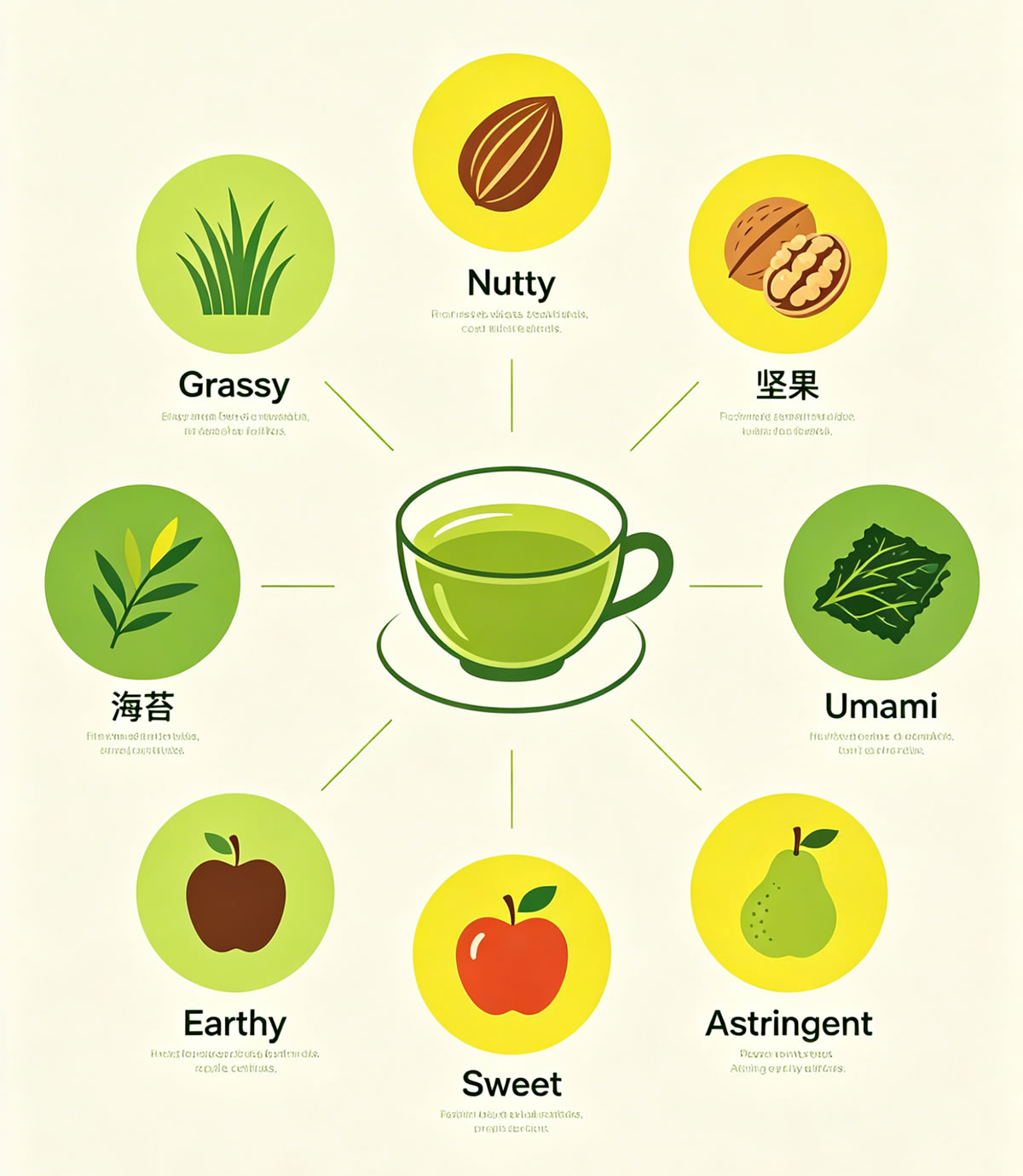
While green tea can vary significantly between varieties, all true green teas share certain fundamental flavor characteristics. Here’s a breakdown of the most common taste notes you’ll encounter:
Green Tea Flavor Breakdown
- Vegetal/Grassy: The most prominent note in most green teas, reminiscent of freshly cut grass, steamed spinach, or crisp snap peas. This bright, fresh flavor comes from the chlorophyll preserved during processing.
- Nutty/Toasty: Many green teas have subtle nutty undertones similar to roasted chestnuts, sunflower seeds, or toasted rice. This is especially common in pan-fired Chinese green teas.
- Umami/Savory: A rich, brothy, seaweed-like flavor that is particularly pronounced in Japanese green teas like matcha and gyokuro. Umami comes from high levels of the amino acid L-theanine.
- Earthy: Some green teas have mild earthy notes, similar to damp forest floor or fresh mushrooms, which adds depth to the flavor profile.
- Natural Sweetness: High-quality green tea has a delicate, natural sweetness that emerges after the initial sip, rather than the sharp sweetness of added sugar. Think of the sweetness of fresh vegetables or ripe fruit.
- Astringency: A pleasant dryness or puckering sensation in the mouth, similar to biting into a green apple. This is caused by tannins and should be balanced, not overwhelming.
Why Does My Green Tea Taste Bitter? (The Bitterness Trap)
Many people who try green tea for the first time find it unpleasantly bitter and assume that’s just how green tea tastes. In reality, bitter green tea is almost always the result of improper brewing, not the tea itself.
The main culprit behind bitter green tea is the release of too many tannins and catechins. These compounds are beneficial for health, but when extracted in excess, they create a harsh, bitter taste. Here are the three most common mistakes that make green tea bitter:
The Three Biggest Brewing Mistakes
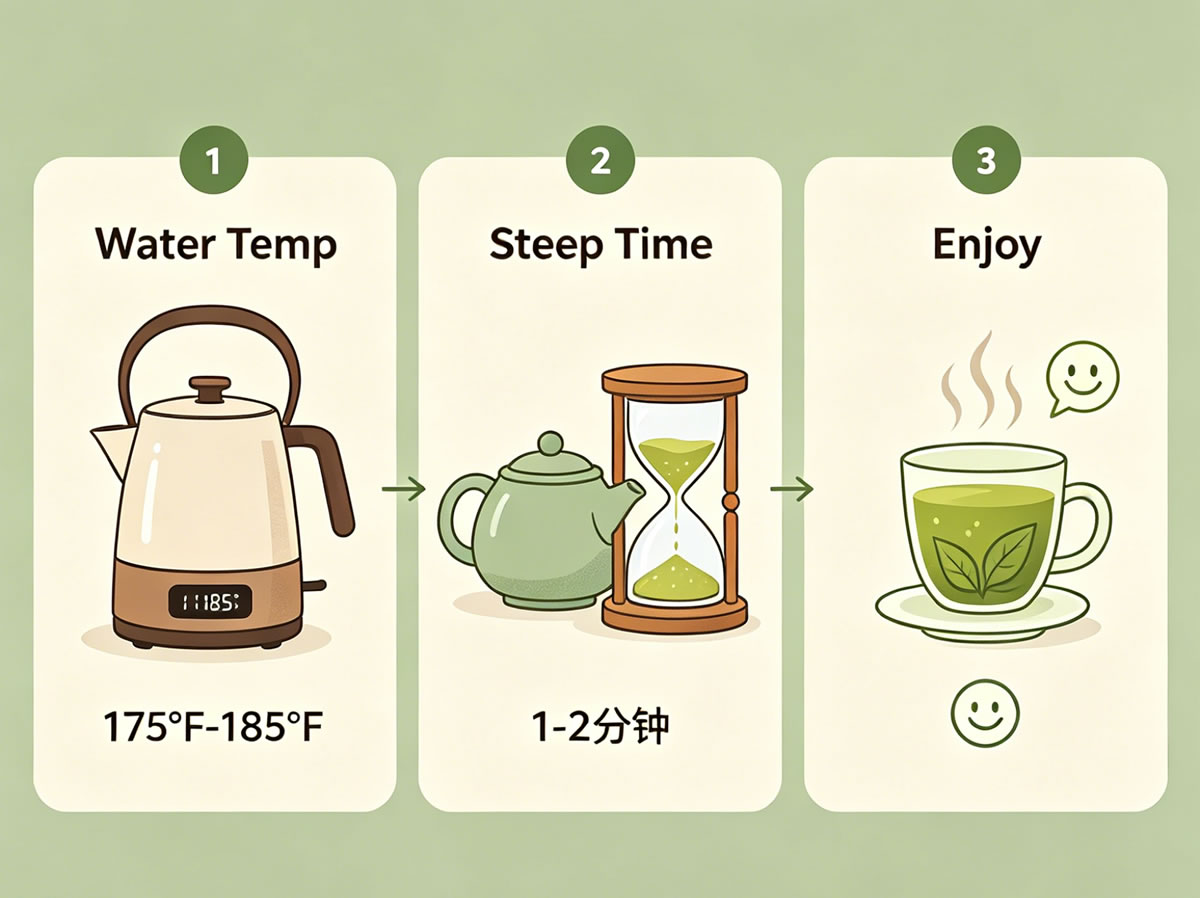
- Water that’s too hot: Never use boiling water (212°F/100°C) to brew green tea. Boiling water scorches the delicate leaves and extracts excessive bitter compounds. The ideal temperature is 175°F to 185°F (80°C to 85°C).
- Steeping too long: Green tea steeps much faster than black tea. Steeping for more than 3 minutes will result in a bitter cup. The golden steeping time for most green teas is 1 to 2 minutes.
- Using too much tea: Using more tea leaves doesn’t make a stronger, better-tasting cup – it just makes it more bitter. Follow the recommended ratio of 1 teaspoon of tea leaves per 8 ounces of water.
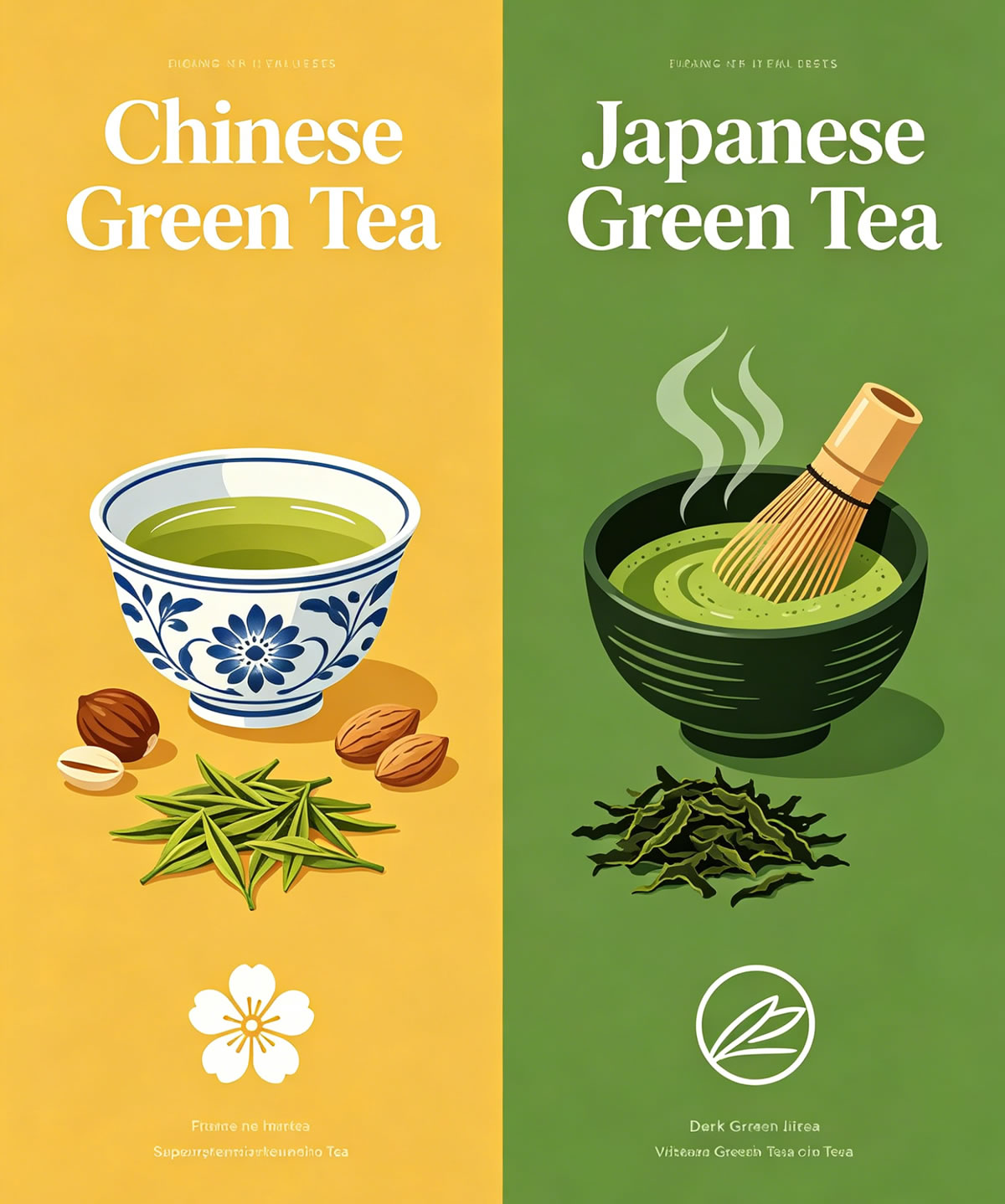
Chinese vs. Japanese Green Tea: Two Distinct Flavor Worlds
The biggest difference in green tea flavor comes from how the leaves are processed after harvesting. Chinese and Japanese green teas use different methods to stop oxidation, resulting in dramatically different taste profiles.
| Characteristic | Chinese Green Tea (Pan-Fired/Roasted) | Japanese Green Tea (Steamed) |
|---|---|---|
| Processing Method | Leaves are pan-fired or roasted in woks to stop oxidation | Leaves are steamed immediately after harvesting to stop oxidation |
| Color | Pale yellow to light green liquor | Vibrant, deep green liquor |
| Primary Flavors | Nutty, toasty, floral, milder, slightly smoky | Bright grassy, seaweed-like, intense umami |
| Texture | Lighter, more delicate mouthfeel | Richer, more full-bodied |
| Popular Varieties | Longjing (Dragon Well), Gunpowder, Biluochun | Sencha, Matcha, Gyokuro, Genmaicha |
Flavor Profiles of Popular Green Tea Varieties
Here’s a quick guide to the taste of the most common green tea varieties you’ll find in American supermarkets and tea shops:
Matcha
Matcha is made by grinding whole green tea leaves into a fine powder, which you mix with water and drink. It has a rich, creamy, full-bodied texture with intense umami flavor, subtle bitterness, and a long, sweet aftertaste. High-quality matcha should taste smooth and vegetal, not harsh or grassy.
Our Recommendation
If you’re new to matcha, start with a culinary-grade matcha that’s perfect for lattes and smoothies. For the best drinking experience, try a ceremonial-grade matcha.
Sencha
Sencha is the most popular green tea in Japan. It has a bright, fresh, grassy flavor with pronounced seaweed-like umami notes and a clean, refreshing finish. It’s a great everyday green tea and a good introduction to Japanese green teas.
Longjing (Dragon Well)
One of China’s most famous green teas, Longjing has a delicate, sweet flavor with nutty and chestnut-like notes. It has a smooth, silky texture and very little bitterness when brewed correctly. The leaves are flat and sword-shaped, and the liquor is pale yellow-green.
Gunpowder Green Tea
Gunpowder tea gets its name from the small, rolled pellets that resemble gunpowder. It has a strong, bold flavor with smoky and earthy notes and a slightly astringent finish. It’s often used in Moroccan mint tea and holds up well to added flavors.
Jasmine Green Tea
Jasmine green tea is made by scenting green tea leaves with jasmine flowers. It has a sweet, floral aroma and flavor that dominates the tea’s natural taste. It’s one of the most popular green teas in America because of its approachable, fragrant taste and minimal bitterness.
How to Brew Green Tea That Tastes Good (Not Bitter)
Follow these simple steps to brew the perfect cup of green tea every time:
- Heat water to the correct temperature: Heat water until small bubbles start to form at the bottom of the pot (about 175°F to 185°F). Do not let it come to a rolling boil.
- Measure your tea leaves: Use 1 teaspoon of loose-leaf green tea per 8 ounces of water.
- Steep for the right amount of time: Pour the hot water over the tea leaves and let steep for 1 to 2 minutes. For a stronger cup, use more tea leaves rather than steeping longer.
- Strain and enjoy: Remove the tea leaves immediately after steeping to prevent bitterness. Drink while hot for the best flavor.
Frequently Asked Questions
Q: Is it okay to add sugar or milk to green tea?
A: While purists may disagree, there’s nothing wrong with adding sugar, honey, or milk to green tea if that’s how you enjoy it. However, adding these ingredients will mask the tea’s natural flavor profile. If you find your green tea too bitter, try adjusting your brewing method before adding sweeteners.
Q: How many calories are in green tea?
A: Plain green tea contains virtually no calories (less than 5 calories per cup). The calories come from any added sugar, milk, or other ingredients.
Q: Which green tea is the least bitter?
A: Jasmine green tea and Longjing are generally the least bitter varieties. Japanese green teas like matcha and gyokuro can be more bitter if brewed incorrectly, but high-quality versions should have a balanced bitterness with plenty of umami.
Q: Does green tea taste like matcha?
A: Matcha has a much more intense and concentrated flavor than brewed green tea because you’re consuming the entire leaf. While they share some similar notes, matcha is richer, creamier, and more umami-forward than regular green tea.
Q: Can I reuse green tea leaves?
A: Yes, most high-quality green tea leaves can be steeped 2-3 times. Each subsequent steep will have a slightly different flavor profile, often becoming sweeter and less astringent.
Heightgao

I have been researching the health benefits of tea for five years, and I am also very passionate about tea culture.