
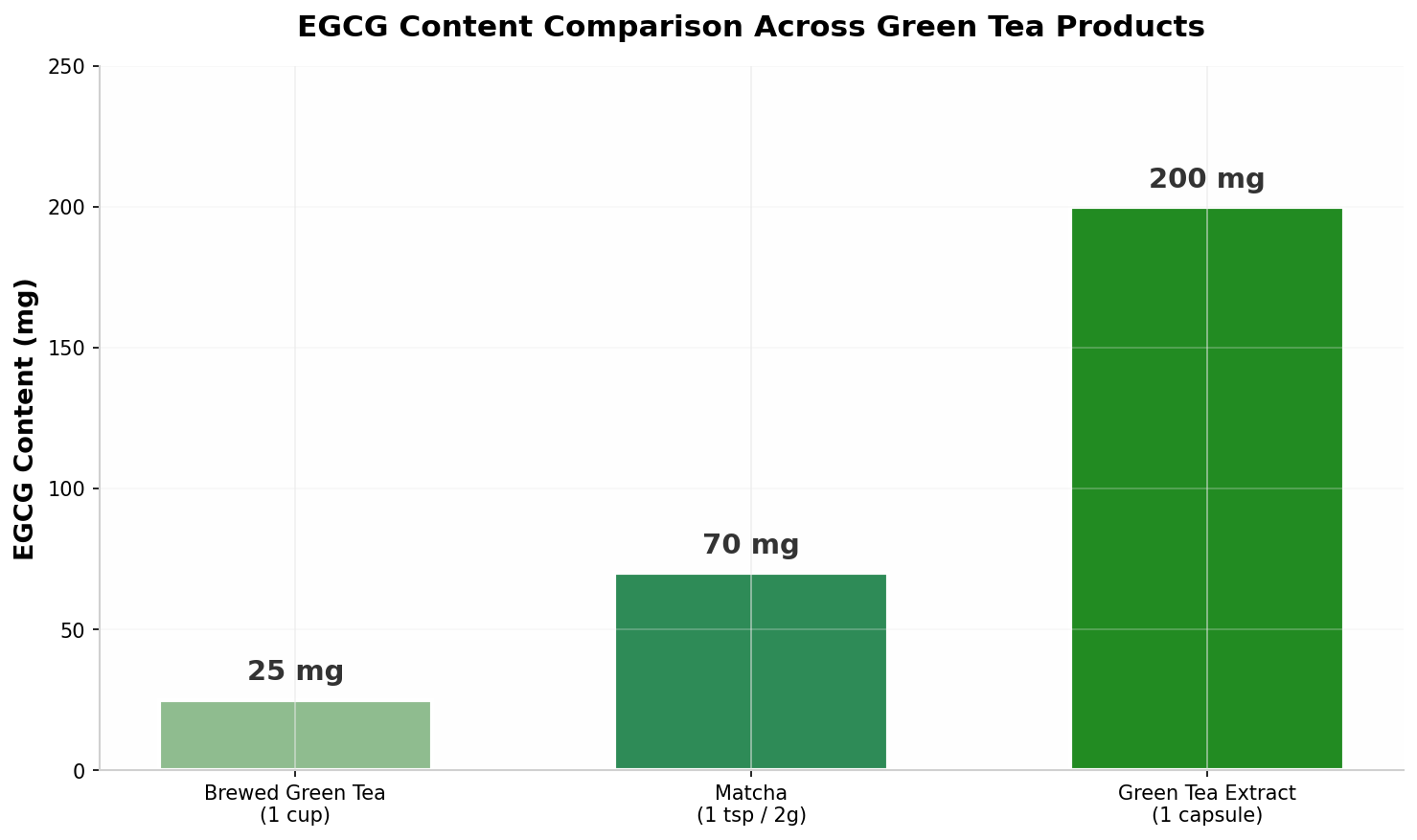
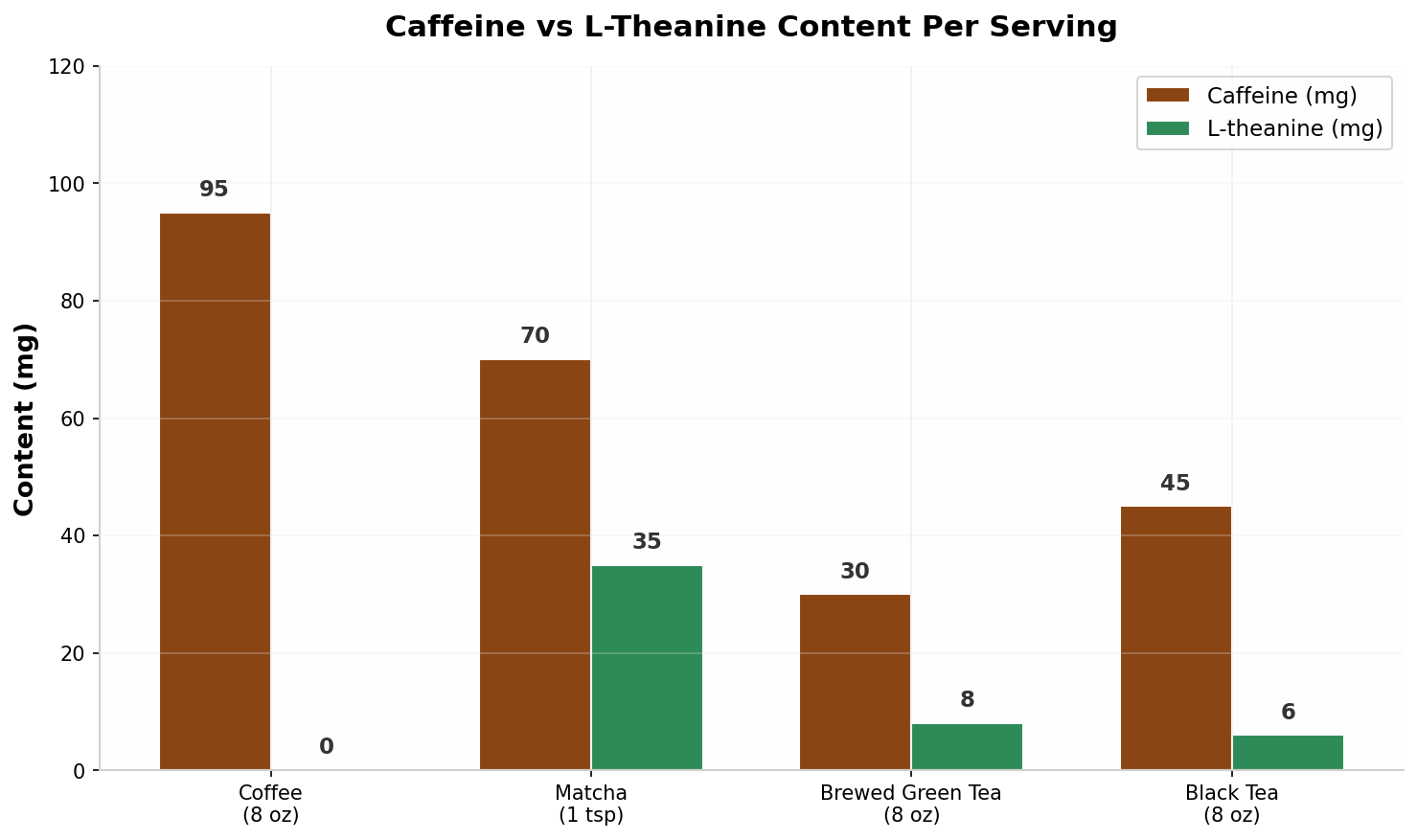
Matcha tea delivers roughly 3 times more EGCG antioxidants than brewed green tea because you consume the entire shade-grown leaf as a fine powder. A single teaspoon of ceremonial matcha provides approximately 70 mg of caffeine paired with 35 mg of L-theanine, creating sustained calm alertness without the jittery crash that coffee brings. Research from the Journal of Chromatography shows matcha contains up to 137 times more EGCG catechin than low-grade tea bag green tea. For tea lovers asking what is matcha tea and whether matcha tea healthy claims hold up, the evidence points toward genuine metabolic, cognitive, and cardiovascular benefits — though preparation quality and sourcing matter enormously.
Core Mechanism — How Japanese Green Tea Extract Works Inside You
What Exactly Is Matcha Tea and Why the Whole Leaf Matters
Matcha comes from the same Camellia sinensis plant as all green teas, but the processing creates a fundamentally different nutritional delivery system. Farmers shade the tea bushes for 20 to 30 days before harvest, which forces the plant to crank up chlorophyll production and concentrate L-theanine in the young leaves. After hand-picking, producers steam the leaves to stop oxidation, remove stems and veins, then slowly stone-grind the remaining leaf material into a powder so fine it feels like cosmetic talc between your fingers. When you whisk matcha into hot water, you are not steeping and discarding leaves — you are consuming 100% of the leaf biomass. This whole-leaf consumption is the single reason matcha green tea extract delivers dramatically higher concentrations of catechins, fiber, chlorophyll, and amino acids compared to any brewed tea format. The difference is not marginal. A 2023 study directly comparing ingestible catechin amounts found that matcha powder delivers significantly more bioaccessible polyphenols per serving than even high-quality bagged green teas.
The shading process creates a fascinating biochemical trade-off. Less sunlight means less polyphenol synthesis, which actually reduces total catechin concentration in the raw leaf. But because you eat the entire leaf rather than just the water-soluble fraction, the net antioxidant delivery to your body ends up far higher. Japanese tea masters have intuitively understood this for centuries. Modern science has only recently caught up, confirming what the Zen monks who brought matcha to Japan in the 12th century experienced firsthand — a beverage that sustains alertness during long meditation sessions without causing restlessness.
The Nrf2 Pathway — Your Body’s Built-In Defense Switch
EGCG, the most abundant catechin in matcha, activates a cellular signaling pathway called Nrf2/Keap1. Think of Nrf2 as a master regulator sitting in your cells, waiting for the right signal to flip on hundreds of antioxidant and detoxification genes. Under normal conditions, Keap1 keeps Nrf2 locked down and inactive. When EGCG enters your system, it modifies Keap1’s structure, releasing Nrf2 to travel into the cell nucleus and trigger production of glutathione, catalase, and superoxide dismutase — your body’s own antioxidant enzymes. This is fundamentally different from direct antioxidant action. Instead of merely scavenging free radicals one by one, EGCG essentially upgrades your cells’ native defense infrastructure. A 2024 review published in the journal Nutrients confirmed that matcha’s EGCG content effectively modulates this pathway, which explains its broad protective effects against oxidative stress, inflammation, and even certain metabolic dysfunctions.
Solution 1 — Antioxidant Protection and Cellular Defense
How Matcha and Matcha Powder Health Benefits Stack Up Against Other Foods
When researchers at the USDA analyzed over 500 foods and beverages for flavonoid content, green tea leaves ranked number one, with cacao beans placing a distant second. Matcha sits at the very top of that green tea category because of its whole-leaf delivery format. The Oxygen Radical Absorbance Capacity values for high-quality matcha consistently exceed those of blueberries, pomegranate, and acai on a per-gram basis. For tea drinkers wondering whether matcha green tea extract justifies the higher price tag, the antioxidant density per dollar actually compares favorably when you account for the fact that one gram of matcha powder equates to roughly ten cups of brewed green tea in terms of catechin delivery.
The practical implications show up in measurable biomarkers. Human supplementation studies demonstrate that green tea catechins reliably increase the antioxidative potential of blood plasma within hours of consumption. One study documented a 22% increase in the time required for LDL cholesterol to oxidize when participants consumed 1,000 mg of gallated catechins daily. Since oxidized LDL is a key driver of atherosclerosis, this represents a meaningful shift in cardiovascular risk profile. The effect appears transient — lasting roughly 6 hours post-consumption — which supports the traditional Japanese practice of drinking green tea throughout the day rather than in one large dose.
| Product | EGCG per Serving | Total Catechins | L-theanine | Absorption Speed |
|---|---|---|---|---|
| Brewed Green Tea (8 oz) | ~25 mg | ~50 mg | ~8 mg | Moderate |
| Matcha (1 tsp / 2g) | ~70 mg | ~140 mg | ~35 mg | Slow & Sustained |
| Green Tea Extract Capsule | ~200 mg | ~250 mg | ~0 mg | Rapid |
| Bottled Green Tea Drink | ~10 mg | ~20 mg | ~2 mg | Moderate |
| White Tea (8 oz) | ~9 mg | ~25 mg | ~6 mg | Moderate |
Step-by-Step — Maximizing Antioxidant Absorption from Your Matcha
Preparation technique directly impacts how many catechins actually reach your bloodstream. Start with water heated to 175°F (80°C), not boiling. Scalding water destroys delicate compounds and creates harsh bitterness while actually degrading some antioxidant content. Sift your matcha powder through a fine mesh strainer before whisking — this eliminates clumps that trap undissolved catechins at the bottom of your bowl. Use approximately 1 teaspoon (2 grams) of powder per 2 to 3 ounces of water. Whisk vigorously in a zigzag motion using a bamboo chasen or electric frother for 20 to 30 seconds until a fine microfoam forms on the surface. Drink immediately — catechins begin degrading within minutes of exposure to air and light.
Timing matters for absorption too. Consuming matcha with a small amount of fat — a handful of nuts or a splash of milk in a latte — enhances catechin bioavailability because EGCG is partially fat-soluble. On the flip side, avoid drinking matcha alongside iron-rich meals if you are concerned about iron absorption, as tea tannins can reduce non-heme iron uptake by up to 25%. The workaround is simple — separate your matcha ritual from your iron-rich meals by at least one hour.
The Skin Health Angle — An Unexpected Bonus from Daily Matcha
While most people explore matcha for internal health benefits, the skin protective effects deserve mention. A 12-week study published in the British Journal of Nutrition found that participants consuming green tea catechins showed measurable reductions in UV-induced skin damage, with catechin metabolites detectable in skin tissue after consistent intake. The mechanism involves both direct antioxidant neutralization of free radicals generated by sun exposure and modulation of inflammatory signaling pathways that drive photoaging. EGCG applied topically has also demonstrated powerful acne-reducing effects, with one split-face study showing an 89% reduction in inflammatory lesions using a 5% EGCG solution over 8 weeks. Drinking matcha daily provides these benefits from the inside out, complementing rather than replacing topical sun protection. Many long-term matcha drinkers anecdotally report clearer skin tone and reduced redness, though individual results vary widely based on genetics, sun exposure, and overall skincare routines.
Solution 2 — Fat Metabolism and Weight Management
What the Research Actually Says About Green Tea Extract and Fat Burning
A 2025 study from researchers at Cruzeiro do Sul University in Brazil revealed the mechanism behind green tea’s fat-burning reputation with remarkable clarity. Obese mice fed a high-calorie Western-style diet — complete with chocolate, cookies, and condensed milk — lost up to 30% of their body weight when supplemented with standardized green tea extract at 500 mg per kilogram of body weight over 12 weeks. The key discovery? Green tea’s metabolic effects depend on adiponectin, a protein produced by fat cells that regulates glucose and fatty acid breakdown. When researchers tested adiponectin-deficient mice, the green tea had zero effect on weight loss. This means the supplement works with your body’s existing metabolic machinery rather than forcing an artificial thermogenic response.
Human data tells a more nuanced story. Meta-analyses show that green tea catechins produce an average weight loss of approximately 1.2 to 1.3 kg over 90 days at doses around 886 mg EGCG daily. When paired with exercise, the effect increases — obese participants lost 2.2 kg over 12 weeks compared to 1 kg in the control group. Each 200 mL cup of green tea containing roughly 253 mg catechins may increase fat oxidation by enough to burn an additional 5.7 grams of body fat daily. These numbers are not dramatic, but they are consistent, and they represent real physiological effects rather than marketing hype.
Why Matcha Tea Healthy for Metabolism Differs from Extract Pills
Here is where matcha drinkers gain an edge over capsule poppers. Matcha delivers catechins embedded within the natural leaf matrix — fiber, chlorophyll, cell membranes, and accompanying amino acids. This slows digestion and creates a sustained, gradual release of EGCG into your bloodstream rather than the rapid spike-and-fade pattern of concentrated extracts. The L-theanine present in matcha also modulates stress hormone levels, which indirectly supports weight management by blunting cortisol-driven cravings and emotional eating patterns. A Reddit user in r/matcha summarized this perfectly after switching from green tea extract capsules to daily matcha — “The pills made me nauseous and jittery. With matcha, I just feel… steady. And I snack way less at 3 PM.” That subjective experience aligns with what mechanistic studies predict about the difference between isolated compounds and whole-food delivery.
Solution 3 — Cognitive Performance and Sustained Energy
The Caffeine-L-Theanine Synergy — Why Matcha Feels Different from Coffee
Matcha contains roughly 70 mg of caffeine per teaspoon — about two-thirds of a standard cup of coffee. Yet anyone who has switched from coffee to matcha will tell you the experience is completely different. The secret lies in L-theanine, an amino acid almost unique to tea that crosses the blood-brain barrier and modulates neural activity. When L-theanine teams up with caffeine at the roughly 1-to-2 ratio found naturally in matcha, the result is not stimulation — it is focused calm. Electroencephalography studies show this combination increases alpha brain wave activity, the neural signature of wakeful relaxation. Participants in controlled trials demonstrated improved hit rates, faster reaction times, and better target discriminability compared to placebo — and these cognitive gains exceeded what caffeine alone produced.
The mechanism involves multiple neurotransmitter systems. Caffeine blocks adenosine receptors, preventing drowsiness. L-theanine simultaneously increases GABA and serotonin levels, promoting relaxation without sedation. The combined effect creates what tea enthusiasts have long described as a state of “calm alertness” — mentally sharp but emotionally grounded. For students, programmers, writers, and anyone engaged in sustained cognitive work, this represents a genuine functional advantage over coffee’s more erratic energy profile. A 2008 study published in the Journal of Nutrition documented lower overall tonic alpha power in participants who consumed the combined treatment, indicating a more generalized deployment of attentional resources to the visual modality.
Real User Experiences from Reddit — What Actual Tea Drinkers Report
The r/matcha community offers a goldmine of unfiltered user reports. One software developer wrote that matcha replaced their afternoon coffee habit entirely — “I used to crash hard around 2 PM every day. Since switching to matcha at lunch, I get steady focus through 6 PM without the anxiety spikes.” Another user noted improved sleep quality after moving their caffeine intake earlier in the day via matcha rather than spreading it across multiple coffees. Not all experiences are universally positive. Some users report that matcha on an empty stomach causes nausea, particularly with lower-quality culinary grades that contain higher tannin levels. The consensus from experienced community members is clear — start with half a teaspoon, always consume with food, and invest in ceremonial grade if you plan to drink it straight rather than in lattes.
Microdosing Matcha — An Unconventional Approach Gaining Traction
A small but vocal subset of matcha drinkers experiments with sub-perceptual dosing throughout the day rather than one large serving. By dividing a single teaspoon into three or four mini-servings consumed every few hours, they maintain steadier plasma catechin levels without peaks and valleys. While no clinical trials specifically test this approach, the pharmacokinetics of EGCG support the theory — catechins have relatively short half-lives in the bloodstream, and frequent small doses may sustain antioxidant activity more effectively than one large bolus. Anecdotal reports from forum users who have tried this method describe sustained mental clarity without any sense of overstimulation. This approach also reduces the risk of stomach discomfort since each dose is smaller. For productivity hackers and biohacking enthusiasts, microdosing matcha represents an interesting middle ground between traditional tea ceremony culture and modern performance optimization.
8 Beginner Pitfalls — Lessons from Forums and Failed First Attempts
Every experienced matcha drinker has a story about their first terrible bowl. Mine involved a $45 tin of ceremonial Uji matcha, water straight off a rolling boil, and a fork from the kitchen drawer because I had not yet bought a whisk. The result looked like pond water and tasted like burnt grass clippings. I almost wrote matcha off entirely. Months later, after watching a Japanese tea ceremony demonstration at a cultural festival, I realized the problem was not the powder — it was every step of my preparation. The r/matcha subreddit overflows with similar confessionals. New users routinely blame the product when the real culprits are technique, expectations, or storage habits. Below are the eight most common mistakes that turn potential matcha enthusiasts into permanent skeptics, drawn from forum discussions, product reviews, and my own hard-won experience.
Pouring 212°F water over matcha scorches the delicate catechins and L-theanine while releasing excessive tannins that create bitter, astringent flavor. Keep your water at 175°F maximum. Invest in a simple kettle with temperature control or let boiled water sit for 3 minutes before whisking.
Genuine Japanese matcha comes from specific regions — Uji, Kagoshima, Nishio, Shizuoka. Many cheap powders labeled “matcha” originate from China or are simply ground green tea leaves without the shading process. Look for country of origin on the label and expect to pay $25 to $50 for 30g of authentic ceremonial grade.
Light, heat, air, and moisture are the four enemies of matcha freshness. That vibrant emerald green fades to dull olive within weeks of countertop storage. Keep your tin sealed airtight in the refrigerator, and let it come to room temperature before opening to prevent condensation from ruining the powder.
Ceremonial matcha costs roughly $1.50 to $4.00 per gram and delivers subtle, delicate flavor. When you drown it in oat milk and vanilla syrup, those nuanced notes disappear entirely. Use culinary grade for lattes and save ceremonial for traditional preparation with just water.
The combination of caffeine and tannins hits harder without food buffering your stomach lining. New users frequently report nausea, cramping, or reflux from this mistake. Eat something first — even a piece of toast or a banana makes a dramatic difference in tolerance.
The safe daily intake of catechins for adults sits around 338 mg of EGCG, equivalent to roughly 4 grams of matcha or 2 level teaspoons. Exceeding this regularly exposes you to unnecessary risk of liver enzyme elevation, especially with concentrated green tea extract supplements rather than whole-leaf matcha.
Bright jade green indicates high chlorophyll content and proper shading. Yellowish, brownish, or dull olive powder signals oxidation, poor storage, or fake matcha cut with fillers. If the color looks wrong, trust your eyes and do not drink it.
Matcha clumps naturally due to static electricity and fine particle size. Dumping dry powder directly into water creates lumps that trap undissolved catechins at the bottom of your cup. Always sift through a fine mesh strainer before adding water — the 10 seconds of effort transforms your drinking experience.
Ceremonial vs Culinary — Which Grade Delivers Better Green Tea Extract Matcha Benefits?
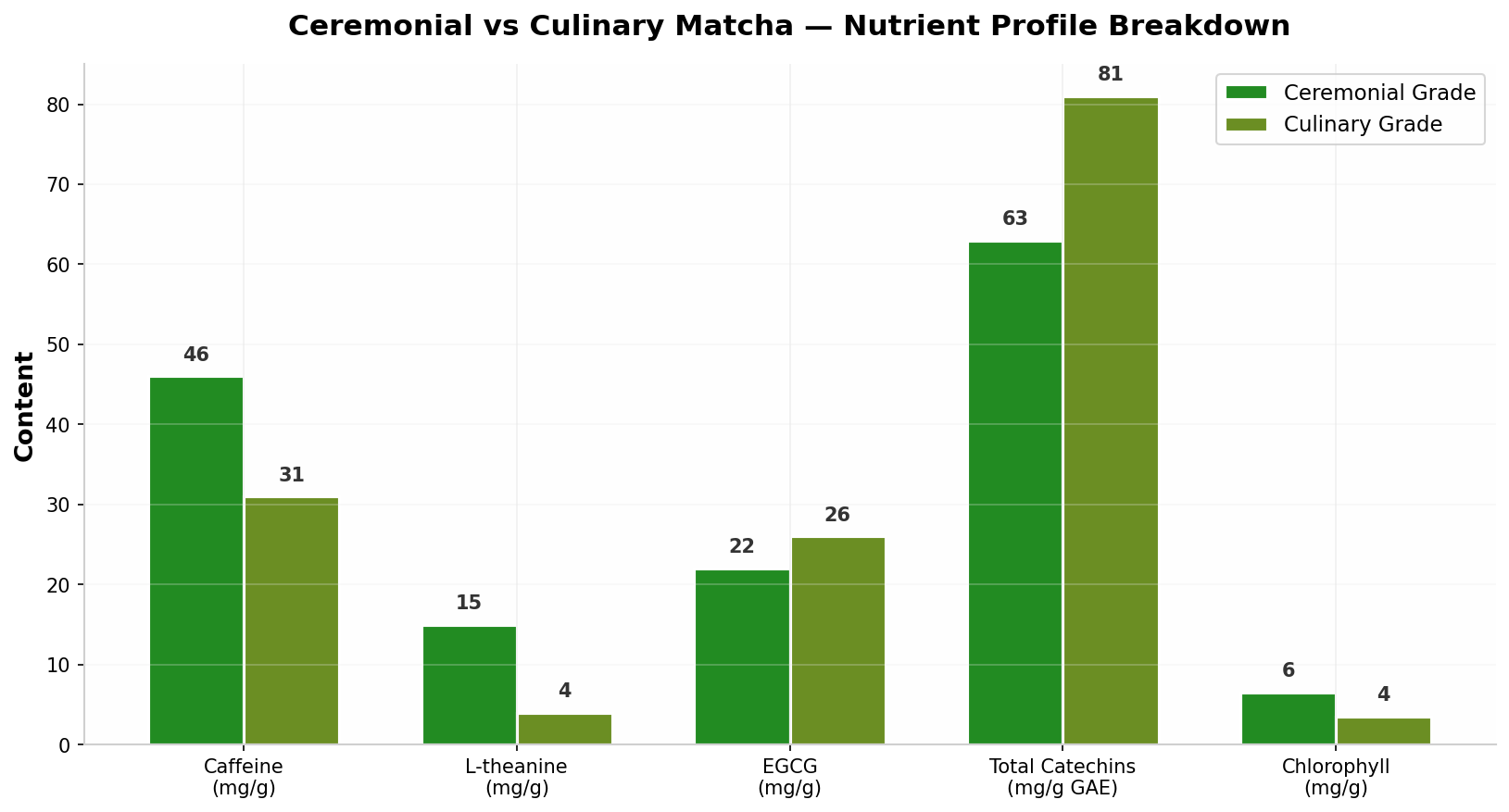
The grade debate surprises most newcomers. Conventional wisdom assumes ceremonial matcha is “healthier” because it costs more and tastes smoother. Laboratory analysis reveals a more complex picture. Culinary grade matcha, produced from slightly older leaves with more sun exposure, actually contains higher total catechins and EGCG concentrations than ceremonial grade. A 2025 study in the Journal of Food Measurement and Characterization found culinary matcha averaged 26.1 mg/g EGCG compared to 21.8 mg/g in ceremonial samples. The difference was not statistically significant, but the trend is consistent across multiple analyses.
Ceremonial grade wins on L-theanine and caffeine content — the young, heavily shaded leaves accumulate more of these compounds, which explains the sweeter, umami-rich flavor profile. For cognitive benefits and calm energy, ceremonial may have the edge. For pure antioxidant density and metabolic support, culinary grade potentially delivers more bang per buck. My personal approach after two years of daily matcha drinking? Ceremonial for morning usucha (thin tea), culinary for afternoon lattes. Both provide meaningful health benefits — the “best” choice depends on which compounds you prioritize and how you plan to consume it.
| Feature | Ceremonial Grade | Culinary Grade |
|---|---|---|
| Leaf Source | First flush, youngest buds | Later harvest, mature leaves |
| Color | Vivid jade green | Deeper green, sometimes olive |
| Flavor | Sweet, umami, smooth | Robust, slightly bitter, earthy |
| Best Use | Traditional tea, water only | Lattes, smoothies, baking |
| EGCG (mg/g) | ~22 | ~26 |
| L-theanine (mg/g) | ~15 | ~4 |
| Caffeine (mg/g) | ~46 | ~31 |
| Price per 30g | $25 – $60 | $10 – $25 |
Safety Realities — What Reddit and Clinical Data Agree On
Liver Concerns With High-Dose Extracts vs Whole-Leaf Matcha
The safety profile differs dramatically between whole-leaf matcha and concentrated green tea extract supplements. The NIH LiverTox database documents rare cases of acute liver injury associated with high-dose EGCG supplements, particularly products delivering 500+ mg of EGCG in capsule form. These injuries typically present as hepatocellular damage with elevated ALT and bilirubin levels. The mechanism appears idiosyncratic rather than dose-dependent in a simple linear way — genetic factors involving the HLA-B*35:01 allele may predispose certain individuals to this reaction. No documented cases of liver injury exist from moderate whole-leaf matcha consumption at typical daily intakes of 1 to 3 teaspoons.
The critical distinction is delivery format. Matcha delivers catechins within a natural food matrix containing fiber, proteins, and polysaccharides that slow absorption and reduce peak plasma concentrations. Extract capsules dump isolated EGCG directly into your system, creating higher peak levels that stress hepatic processing capacity. If you have any history of liver conditions, avoid concentrated extracts entirely and stick with whole-leaf preparations. Even healthy individuals should not exceed 2 teaspoons of matcha daily on a sustained basis without cycling off periodically.
Iron Absorption and Medication Interactions Worth Knowing
Matcha’s high polyphenol content binds to non-heme iron in your digestive tract, reducing absorption by roughly 25% when consumed simultaneously with iron-rich meals. This matters most for vegetarians, vegans, and anyone managing iron-deficiency anemia. The practical workaround costs nothing — simply separate your matcha consumption from iron-rich meals or supplements by at least 2 hours. Vitamin C consumed alongside iron-rich foods can partially offset this inhibition, so a strategic meal plan eliminates the concern entirely.
EGCG also interacts with certain blood-thinning medications and some chemotherapy drugs by affecting cytochrome P450 enzyme activity. If you take warfarin, clopidogrel, or any medication with a narrow therapeutic window, discuss matcha consumption with your healthcare provider. The vitamin K content in matcha, while modest, can theoretically affect INR stability in patients on warfarin therapy. For most healthy adults drinking 1 to 2 cups daily, these interactions pose negligible risk. The principle of informed caution applies — know your body, know your medications, and adjust accordingly.
The Exercise Connection — Why Athletes Are Adding Matcha to Their Pre-Workout Routine
Endurance athletes have started paying attention to matcha for reasons beyond general wellness. A study on non-athletic but healthy adult men found that 570 mg of green tea catechins increased ventilatory threshold during 8 weeks of cycling training, while the placebo group showed no change. The proposed mechanism involves increased expression of fatty acid translocase in skeletal muscle, which improves intramuscular fat mobilization during sustained effort. Matcha drinkers on r/Fitness regularly report similar subjective experiences — cleaner energy during cardio sessions and less post-workout inflammation when matcha is part of their daily routine. One marathon runner noted that switching from pre-workout powder to matcha eliminated the post-run jitters and heart palpitations they had accepted as normal. The catechin content in matcha also demonstrates anti-inflammatory effects that may reduce exercise-induced muscle damage markers, though human trials specifically using matcha rather than generic green tea extract remain limited.
Quick Answers — Common Questions from New Matcha Drinkers
How much matcha should I drink daily? Most research supports 1 to 3 cups per day, using 1 teaspoon (2 grams) per cup. This delivers roughly 70 to 210 mg of EGCG, well within the established safe range of 338 mg daily for adults.
Can I drink matcha while pregnant? The American College of Obstetricians and Gynecologists recommends limiting caffeine to 200 mg daily during pregnancy. One to two cups of matcha falls within this range, but consult your healthcare provider for personalized guidance.
Why does my matcha taste bitter? Three culprits dominate — water too hot, low-quality powder, or incorrect ratio. Use 175°F water, invest in ceremonial grade for drinking straight, and stick to 1 teaspoon per 2 to 3 ounces of water.
Does matcha expire? Unopened matcha maintains quality for 6 to 12 months in the freezer. Once opened, use within 4 to 6 weeks for optimal flavor and antioxidant potency. The color fade from bright green to dull yellow is your visual freshness indicator.
Is matcha better than coffee for focus? For sustained cognitive work, yes. The L-theanine-caffeine synergy produces smoother, longer-lasting alertness without coffee’s characteristic anxiety and crash. For pure physical energy or athletic performance, coffee may have the edge due to higher caffeine content.
Can I make matcha without a bamboo whisk? Absolutely. A handheld electric milk frother works brilliantly and takes 10 seconds. A sealed jar with hot water shaken vigorously also produces acceptable results. The traditional chasen creates the finest microfoam, but convenience tools get 90% of the way there.
Will matcha stain my teeth? Matcha can cause superficial staining over time due to its high chlorophyll content, though far less aggressively than coffee or black tea. Drinking through a straw and rinsing with water afterward minimizes this effect. The staining is typically temporary and removable with regular dental cleanings.
Why is authentic Japanese matcha so expensive? The labor-intensive production process explains the price. Shading, hand-picking, steaming, de-stemming, and slow stone-grinding at roughly 40 grams per hour all require skilled labor and time. A single 30-gram tin represents hours of grinding alone. Lower-priced alternatives often skip the shading process, use mechanical grinders, or blend in older harvest leaves.
The Bottom Line — Making Matcha Work for Your Goals
Japanese green tea extract in its whole-leaf matcha form delivers genuine, research-backed benefits across antioxidant protection, metabolic support, and cognitive enhancement. The key differentiator from regular green tea is the whole-leaf consumption — you ingest 100% of the catechins, L-theanine, chlorophyll, and fiber rather than just the water-soluble fraction. For antioxidant density, matcha outperforms brewed green tea by a factor of 3 or more. For fat metabolism, the effects are modest but consistent when combined with regular movement. For cognitive performance, the L-theanine-caffeine synergy creates a uniquely productive mental state that coffee simply cannot replicate.
Quality sourcing and proper preparation separate a transformative daily ritual from an expensive, bitter disappointment. Buy Japanese-origin matcha from reputable vendors. Store it airtight in the refrigerator. Use water at 175°F, not boiling. Sift before whisking. Start with half a teaspoon if you are sensitive to caffeine. Choose ceremonial grade for traditional preparation and culinary grade for lattes or cooking. These simple practices, accumulated from centuries of Japanese tea tradition and validated by modern nutritional science, will help you extract maximum benefit from every vibrant green bowl.
Heightgao

I have been researching the health benefits of tea for five years, and I am also very passionate about tea culture.