
Let’s cut the ceremony. You’re staring down a shelf of Korean green teas, and Osulloc is screaming for attention with its minimalist aesthetic and “Jeju Island” origin story. Is it the undisputed king, or is it just the most expensive marketing campaign in the Korean tea industry? The raw data shows Osulloc controls roughly 25% of Korea’s tea production and boasts a TasteAtlas rating of 4.6, making it the most recognized brand globally. But high recognition doesn’t equal high satisfaction for every palate. While Osulloc excels at creating a consistent, approachable product using volcanic soil nutrients, smaller, traditional farms in Boseong and Hadong—like the ones producing Sejak (sparrow tongue) tea—offer a more complex, terroir-driven taste that connoisseurs crave. If you want a safe, high-quality entry point with Instagram-worthy packaging, Osulloc is your pick. If you want to taste the centuries-old soul of Korean tea, you need to look past the conglomerate. This guide is a deep, unfiltered dive into the real landscape of Korean green tea—from the science of the soil to the 8 mistakes every newbie makes.
Why Does Everyone Keep Talking About Osulloc? (And Is The Volcanic Soil Just A Gimmick?)
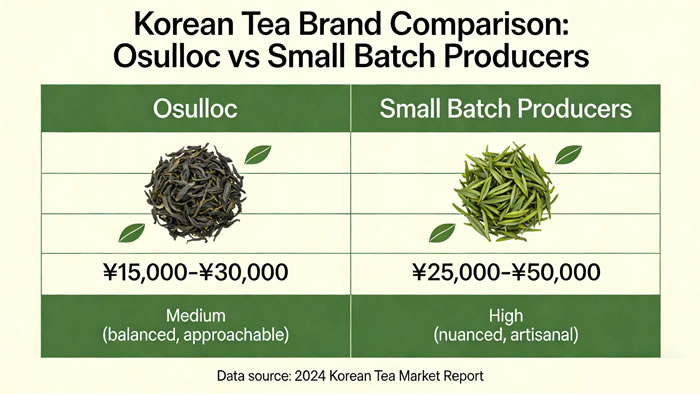
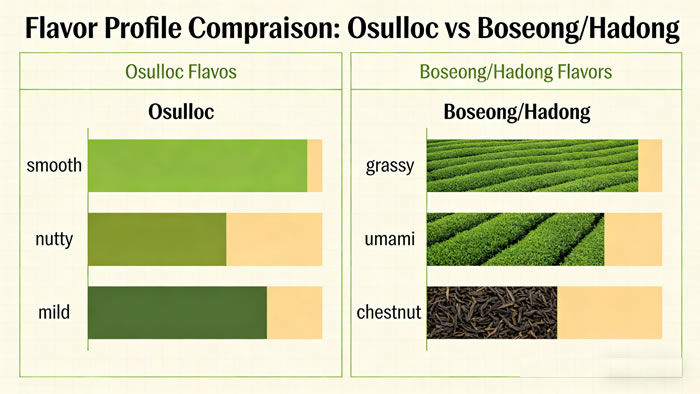
You’ve heard the name. Korean tea brands Osulloc dominates the search results. But why? Let’s strip away the branding. Osulloc isn’t just a tea company; it’s a subsidiary of Amorepacific, a cosmetics giant. This marriage of beauty and tea isn’t accidental. They invested heavily in turning Jeju Island—a volcanic landscape with porous, mineral-rich soil—into a massive, scientifically managed tea factory. The soil here isn’t a gimmick; it’s a legitimate geological anomaly. The basalt-derived earth offers superior drainage and aeration, while the high aluminum content (usually toxic to plants) is actually tolerated and utilized by the tea bushes to create unique biochemical profiles. What does this mean for your cup? A distinct lack of the heavy astringency found in some Chinese greens, and a smoother, often nuttier finish. However, here’s the “anti-mainstream” take: because Osulloc farms 3.3 million square meters and relies heavily on machine harvesting for consistency, you lose the wild, unpredictable character that makes small-batch tea exciting. You’re drinking engineering, not just nature.
“I Want the Authentic Taste, Not Just the Souvenir Box” – 3 Ways to Navigate the Korean Tea Scene
Depending on what you value—convenience, tradition, or pure flavor intensity—your path looks completely different. Here’s how to stop buying blind.
Route One: The Reliable Conglomerate (OSULLOC Green Tea)
If you walk into any duty-free shop or modern department store in Seoul, you’re hitting Osulloc territory. The process here is hyper-standardized. They use near-infrared spectroscopy during harvest to measure amino acids (the stuff that makes tea sweet and savory) and catechins (the bitter stuff). They only pick when the levels hit their target. This is brilliant for consistency. You buy a tin of OSULLOC green tea today, and it tastes exactly like the tin you bought last year. OSULLOC green tea powder is a particular standout for baking and lattes because the particle size is milled to dissolve better than many competitors. For the casual drinker or the baker looking for a reliable matcha alternative, this is the safe bet. Just know you’re paying for that consistency and the 1.5 million tourists who visit their museum annually.
Route Two: The Terroir Hunters (Boseong & Hadong Small-Batch)
This is for the purist. Boseong and Hadong are the historical heartlands of Korean tea. Unlike Jeju’s volcanic landscape, these mainland regions offer ancient, shaded groves where tea has been cultivated for centuries. Here, you find Sejak (second flush) or Woojeon (first flush, before the rains). The flavor profile here is worlds apart from Osulloc. Expect a more delicate, grassy profile with a pronounced “umami” that rivals Japanese gyokuro, but with a roasted chestnut finish unique to Korea. The price is higher, the availability is lower, and you’ll need to seek out specialty importers. But the trade-off is a tea that tells a story of a specific mountain slope, not a corporate spreadsheet. You aren’t just buying tea; you’re buying a piece of agricultural history that doesn’t taste like the guy next to you at the airport’s souvenir.
Route Three: The Snack-Lover’s Gateway (OSULLOC Langue de Chat & Powder)
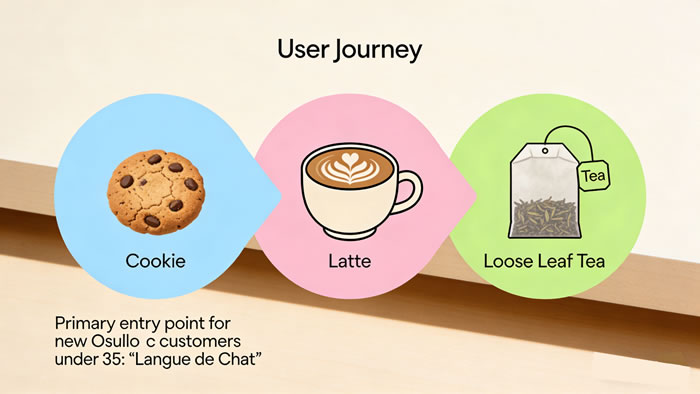
Maybe you don’t even want a cup of tea. You want the flavor. This is where OSULLOC green tea langue de chat enters the chat. These thin, crisp cookies have become a cultural phenomenon. They aren’t just a snack; they are a delivery system for Jeju’s green tea flavor. Using osulloc green tea powder mixed into the batter, the cookie offers a bitter-sweet balance that’s highly addictive. UGC (User Generated Content) from forums often reveals that many people’s “love” for Korean tea actually started with eating these cookies and then moving to the latte. It’s a valid entry point. Don’t let tea snobs tell you otherwise. The powder is versatile—users report mixing it into yogurt, oatmeal, and even using it as a dry rub for pork to add a bitter, umami kick.
The 8 Newbie Mistakes That Will Ruin Your Korean Tea Experience (Backed by Forum Rage)
I crawled through dozens of Reddit threads, Quora discussions, and Naver cafes to find the real complaints. Here is what people actually screw up.
- Mistake #1: Boiling the hell out of Sejak. “I thought all tea needed boiling water. It tasted like burnt spinach water.” Reality: Korean green teas, especially delicate first-flush varieties, need water around 60-70°C (140-158°F). Boiling water extracts excessive tannins. Stick to 70°C for a sweet, non-astringent cup.
- Mistake #2: Thinking “OSULLOC” is the only Korean brand. “I went to Korea and brought back 5 boxes. Now I know I missed out on the local stuff sold in traditional markets.” Reality: Brands like Dongsuh (동서) dominate the supermarket aisle for grain teas, while specialty farms in Hadong sell under their own family names, not a global brand. Explore beyond the mall.
- Mistake #3: Confusing Yuja-cha with Green Tea. “I bought a jar of citrus honey thinking it was green tea. It’s good, but not what I wanted.” Reality: Korean tea culture heavily features infusions (yuja, omija, saenggang). Make sure you’re reading the label. If it says “차” (cha) but looks like jam, it’s a preserve, not loose leaf green tea.
- Mistake #4: Ignoring the harvest date. “My tea tastes flat. It was on sale though.” Reality: Green tea doesn’t age like wine. It degrades. Old tea (older than 12 months) loses its vibrancy. If you buy a bargain Korean tea brand osulloc tin at a discount store, check the production date. Freshness is king.
- Mistake #5: Using tap water. “I live in a hard water area. My tea tasted chalky.” Reality: The mineral-rich volcanic soil tea (like Osulloc) reacts poorly to hard tap water. Use filtered or spring water to let the mineral notes shine.
- Mistake #6: Storing tea in the fridge like a maniac. “Condensation ruined my expensive tin.” Reality: Unless you live in a sauna, keep tea in a cool, dark cupboard. Taking cold tea out into a humid room creates moisture inside the tin.
- Mistake #7: Buying Osulloc green tea powder for traditional ceremony tea. “It was too bitter to drink straight.” Reality: Osulloc’s powder is often a culinary grade (suitable for lattes and desserts), not a ceremonial grade (which is sweeter and smoother for drinking straight). Read the specs.
- Mistake #8: Believing “Organic” on a foreign label without certification. “It said natural. No USDA or Korean organic logo though.” Reality: Look for the Korean Organic Certificate (KOFCC) or USDA logos. Don’t trust vague marketing claims.
“I Just Want the Cookies!” – Why the OSULLOC Langue de Chat Phenomenon Matters
Let’s be real. For a huge segment of the market, OSULLOC green tea langue de chat isn’t just a side product; it’s the main event. Walk into any office in Seoul, and you’ll find a box of these wafer-thin, butter-rich cookies on someone’s desk. They represent a strategic genius from Amorepacific: they made tea accessible through food. The cookies act as a “gateway drug.” A user on a global forum noted, “I bought the cookies for the aesthetic, then I tried the tea latte at their cafe, now I’m brewing OSULLOC green tea at home with a temperature-controlled kettle.” This isn’t accidental. The flavor profile of the cookie—using the aforementioned osulloc green tea powder—is calibrated to be “soft” for the Western palate, avoiding the overwhelming bitterness that sometimes scares new drinkers. The indie market doesn’t have this funnel. Osulloc dominates not just because of quality, but because of an ecosystem that wraps tea in culture, design, and food. If you’re a business looking at how to market tea, this is the case study. If you’re a consumer just looking for a tasty treat, buy the cookies. They’re legitimately good.
Beyond the Leaves: How Science (Not Just Nature) Defines OSULLOC Green Tea Powder
We romanticize tea as a purely natural product. But with Osulloc, you’re dealing with a company that runs its tea farms like a biotech lab. Their green tea powder isn’t just “ground leaves.” It’s the result of a controlled supply chain. They own the farm, the primary processing facility (where leaves are steamed/roasted), and the secondary processing facility (where blending and milling happen). In 2023, they moved their entire secondary processing operation from Jincheon to Jeju to ensure that from soil to shelf, everything carries the “Made in Jeju” stamp. For the consumer, this means traceability. You know exactly where it came from. But it also means homogeneity. If you buy the powder, it will be consistently “good,” but it will never be “mind-blowing.” The trade-off between artisan variability and industrial consistency is stark. A common error among newbies is buying the powder expecting the complex, layered sweetness of a hand-ground traditional matcha. When it doesn’t deliver, they feel cheated. Understanding the use case is crucial. This powder is designed for mixing—lattes, smoothies, baking. Use it accordingly.
FAQ: The “Please Just Tell Me What to Buy” Section (Based on Real Search Data)
Q: Is OSULLOC worth the price?
A: For the experience, yes. For the tea quality relative to niche competitors, sometimes. You’re paying a premium for brand, museum visits, and packaging. If you value aesthetics and consistency, it’s a solid buy. If you’re a flavor chaser, a small-batch Sejak from Boseong will give you more complexity for a similar or lower price per gram.
Q: Can I use OSULLOC green tea powder for a matcha latte?
A: Absolutely. That’s actually its intended primary use. It blends well and has a robust flavor that cuts through milk. Just don’t expect the sweetness of ceremonial grade. Add a touch of honey or vanilla if you prefer it sweeter.
Q: What’s the difference between the green tea and the “Jeju Tangerine Tea” blend?
A: The pure green tea offers the classic nutty, grassy profile. The Jeju Tangerine blend (Hallabong) mixes the green tea base with dried citrus peel. It’s sweeter, more aromatic, and less astringent. UGC suggests it’s a great “intro” tea for people who claim they don’t like green tea.
Q: How do I store osulloc green tea powder once opened?
A: Keep it sealed tightly in the original tin, away from light, heat, and moisture. Do not refrigerate if you open it daily—the temperature fluctuation causes condensation. If you buy in bulk, freeze half, but let it come to room temperature before opening to avoid moisture clumping.
Q: Are there any “Osulloc dupes” or cheaper alternatives?
A: For the tea itself, look for Dongsuh’s premium line or look for private labels from Jeju. For the cookies, several Korean bakeries produce “butter sable” cookies with matcha. However, the specific flavor balance of the OSULLOC green tea langue de chat is heavily guarded. Few replicate the exact crispness and powder ratio.
Final Verdict: Does Soil Really Equal Soul?
We started with the question of whether best Korean tea brands are defined by Osulloc. The answer is layered. Osulloc has achieved something remarkable: they made Korean tea relevant on a global scale, leveraging Jeju’s volcanic soil as a unique selling point. That soil, rich in basalt and minerals, genuinely yields a tea with a distinct smoothness and mineral finish that is hard to find elsewhere. But soul? That comes from unpredictability. The soul of Korean tea lives in the misty mountains of Hadong, where tea pickers still hand-pluck the youngest leaves for a Sejak that tastes like the morning dew on the forest floor. Osulloc gives you the polished, reliable, modern interpretation. The small farms give you the raw, ancient truth. The savvy drinker buys both. They keep a tin of Osulloc in the office for quick lattes and a bag of Hadong Sejak at home for quiet Sunday mornings. They aren’t competitors; they are different categories entirely. Now, armed with this guide, you can navigate the Korean tea aisle with confidence, knowing exactly which rabbit hole you want to fall into.
Heightgao

I have been researching the health benefits of tea for five years, and I am also very passionate about tea culture.